 Khounsub Travel
There are moments in travel that transcend sightseeing. They are the moments when you stop being an observer and become a participant, invited into the intimate rituals that define a culture. In Laos, that moment is the Baci ceremony. Known also as "Sou Khuan" or "soul-tying," this ancient ritual is the quintessential expression of the Lao spirit — a beautiful, poetic, and deeply moving celebration of life, community, and the human soul.
For the traveller, participating in a Baci is not merely watching a performance; it is an honour. It is a window into the animist heart of a Buddhist nation, a tradition that pre-dates the arrival of Buddhism and remains, to this day, the most important ceremony in Lao life.
The philosophy: calling the 32 Souls
At the core of the Baci lies a profound belief. The Lao people hold that the human body is composed of 32 organs, and that each organ is protected by a component spirit or soul, known as a "khuan". These 32 souls are what constitute a person’s vitality, prestige, and well-being.
In the tumult of daily life—during times of stress, illness, travel, or significant change—these 32 souls can become restless or wander away from the body. When they stray, a person may feel unwell, unlucky, or diminished. The purpose of the Baci ceremony is to call these errant souls back, to re-anchor them firmly within the body, and to strengthen the spiritual essence of the individual. It is, in essence, an act of spiritual healing and reaffirmation.
The word "Baci" itself means "ritual of blessing," and its practice weaves together the animist beliefs of the Lao people with the Buddhist reverence for kindness and good fortune. It is performed to mark virtually every significant human occasion: a birth, a marriage, a homecoming, a departure, the Lao New Year (Pi Mai), or even the start of a new business venture. When a guest arrives in a Lao home, or when a villager is about to embark on a long journey, the community gathers to hold a Baci—to wish them strength, safety, and luck.
The Altar: the art of the "Pha Khuan"
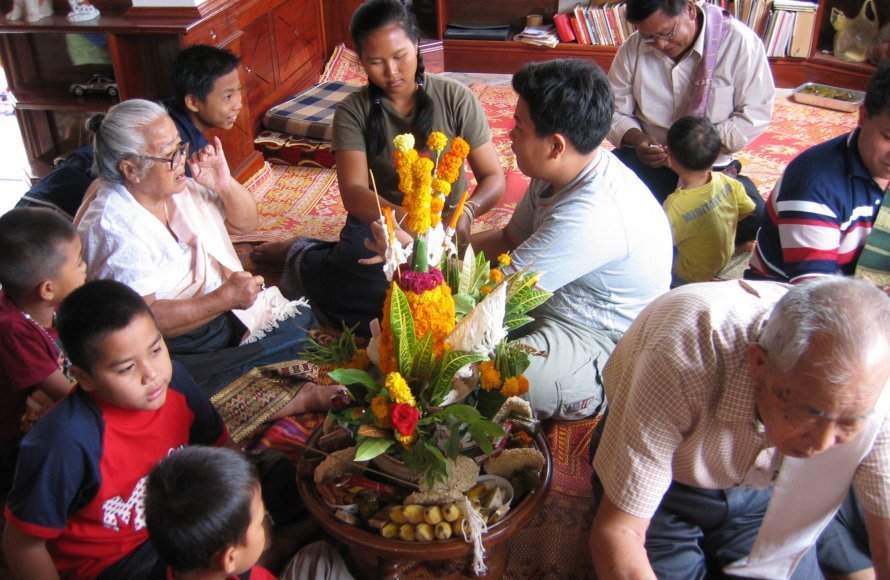
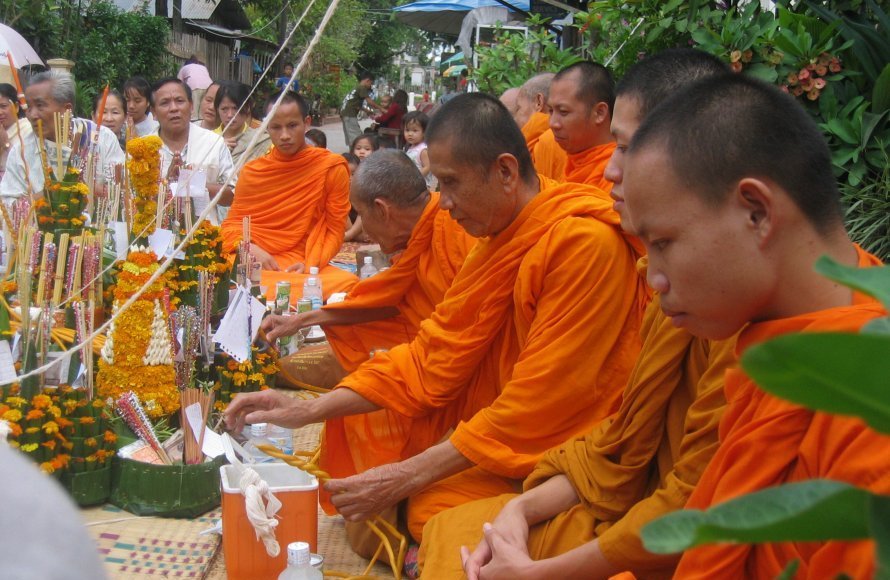
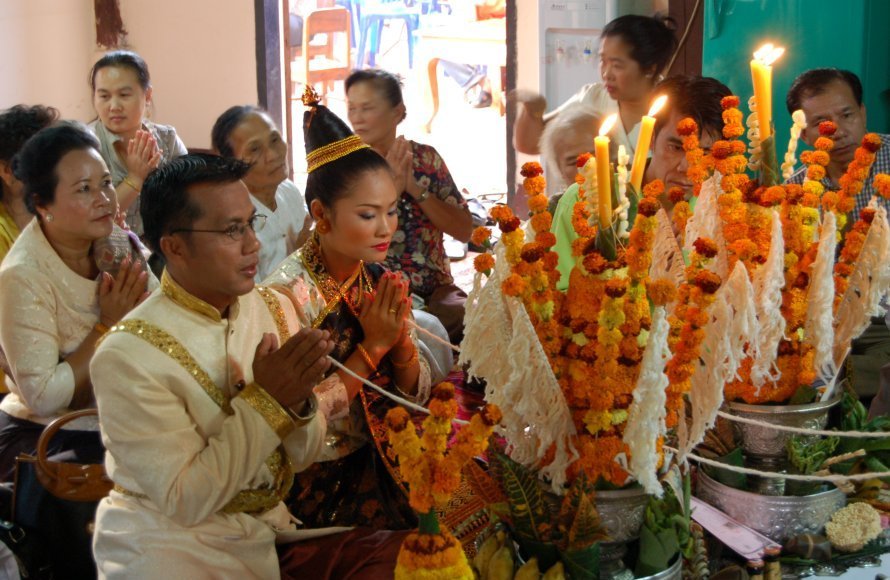
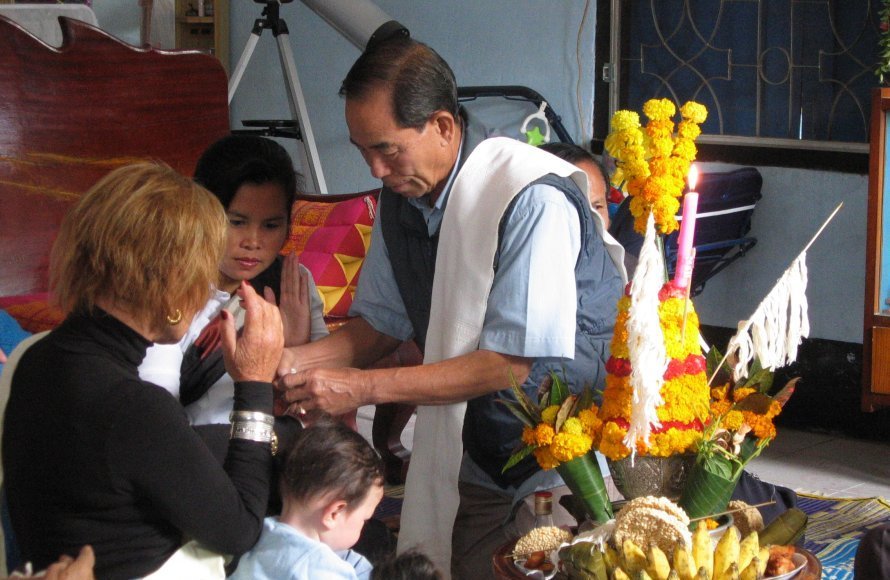
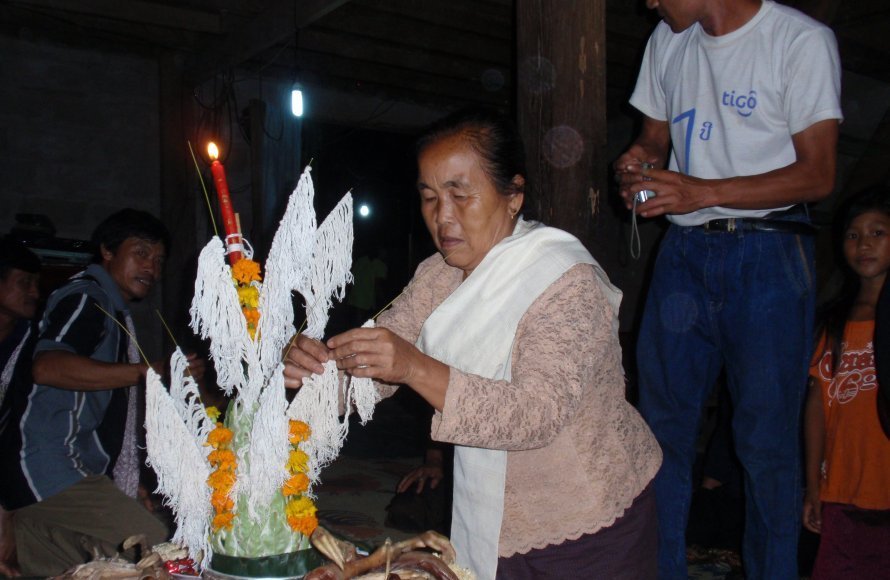
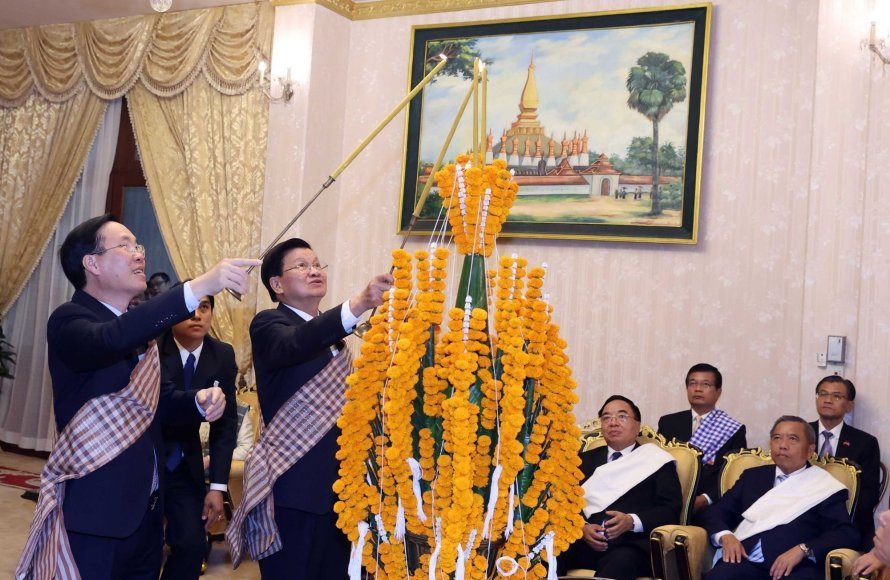
The centrepiece of any Baci ceremony is the "Pha Khuan", a stunningly intricate floral arrangement that is a work of art in itself. Traditionally placed on a silver tray, it consists of a central pedestal—often a decorated tower of banana leaves—from which erupts a profusion of beautiful offerings.
Marigolds and other bright flowers are folded and sculpted into delicate shapes. Incense sticks rise from the structure, ready to carry prayers to the heavens. Most importantly, long, thin cotton strings—white, the colour of purity—are draped over the "Pha Khuan", cascading down its sides like a sacred waterfall. These strings are the tools of the blessing. Surrounding the central masterpiece are smaller offerings: candles, husked rice, boiled eggs, and sometimes Lao Lao whiskey or soft drinks, all intended to nourish and please the returning souls.
The ceremony is led by a "Mor Phorn" — an elder or former monk respected for his wisdom and knowledge of the ancient prayers. As the guests sit in a circle around the "Pha Khuan", the atmosphere is one of quiet reverence and gentle anticipation.
The ritual: tying the blessings
The ceremony begins with the "Mor Phorn" lighting the candles and incense. He then chants the invocation, a melodious Pali or Lao incantation that invites the 32 souls to return to the body of the person being honoured (or to all those present). He asks the spirits, the ancestors, and the guardian deities to bestow their blessings—for good health, for prosperity, for freedom from harm, and for a calm and peaceful mind.
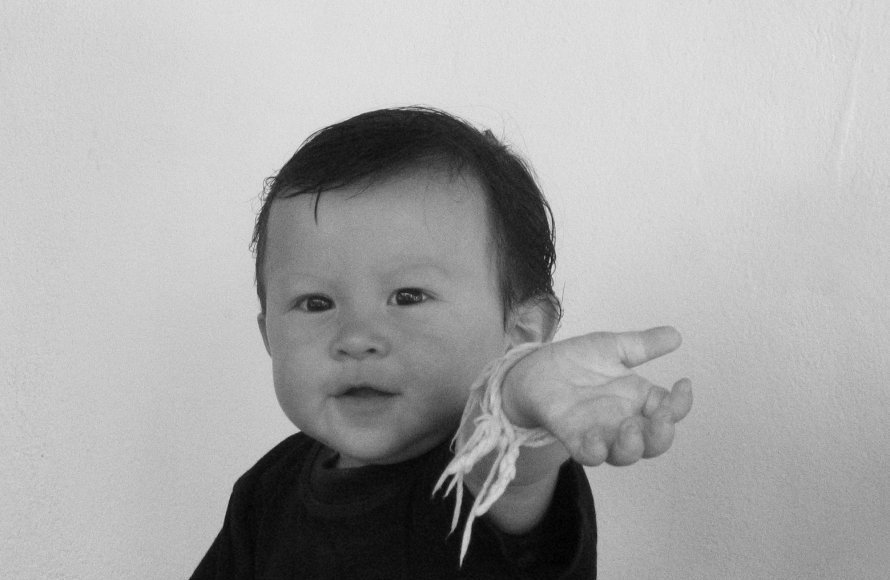
After the chanting, the true heart of the ceremony begins. The "Mor Phorn" takes one of the white cotton strings from the "Pha Khuan" and ties it gently around the wrist of the honouree. As he ties it, he speaks a personal blessing, wishing them well. Then, one by one, every person in the circle does the same. Each guest takes a string, ties it around the wrist of another, and offers a silent or spoken wish.
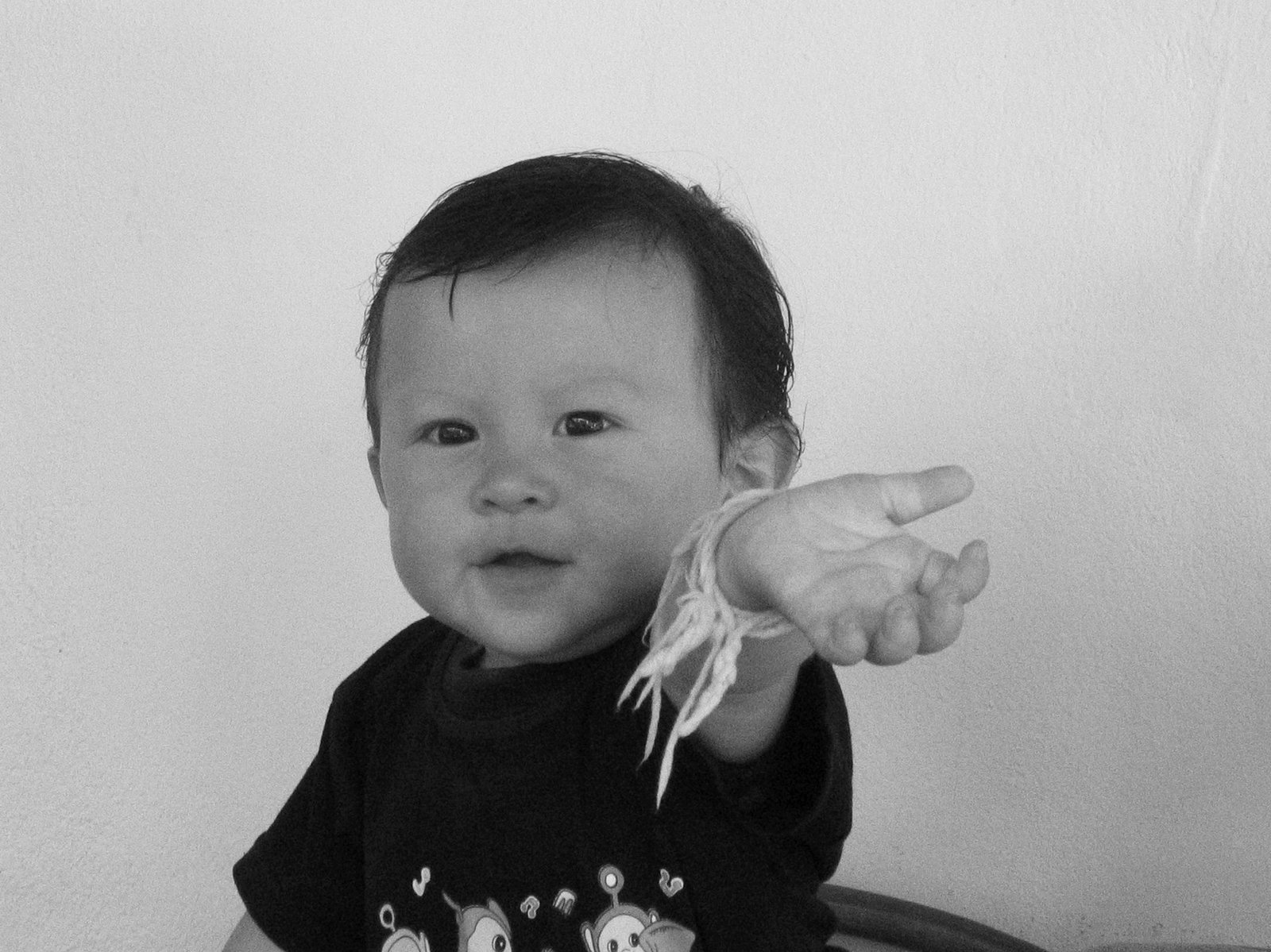
There is no strict hierarchy. Elders bless the young, friends bless each other, and visitors are blessed by their hosts. For the recipient, you may soon find your wrist adorned with dozens of soft white threads, each one a tangible link to the kindness of someone in the room. It is a powerful, tactile experience of human connection.
The meaning: wearing the wishes
Once the ceremony is complete, the mood lightens. The sacred space dissolves into laughter, conversation, and sharing food and drink. But the strings remain. You are instructed to wear them for at least three days. As the days pass and the threads fray and eventually fall off, it is believed that the blessings have been fully absorbed and the wishes have taken root.
The Baci is a profound reminder that in Laos, life is not just a material existence. It is a delicate balance of spiritual forces, held together by community and good intentions. For a visitor, to have your wrist tied by a Lao elder, to receive the whispered wishes of strangers who have become temporary family, is to understand the meaning of "the Land of a Million Elephants" on a deeper level. It is to have a piece of the Lao soul tied, ever so gently, to your own.