 Khounsub Travel
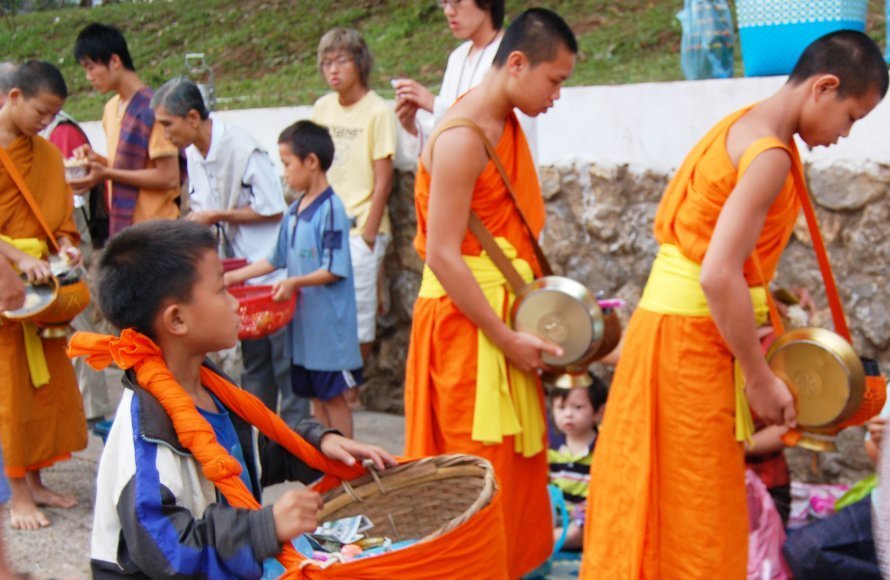
In the soft, lavender light of dawn, a ritual unfolds that has remained unchanged for over a thousand years. As the bustling streets of Luang Prabang or the quiet lanes of a rural village begin to stir, a procession of orange robes emerges from the mist. This is the "Tak Bat" — the morning alms ceremony — and it is the most sacred and photographed tradition in all of Laos.
For the traveller seeking an authentic connection to Lao culture, witnessing "Tak Bat" is an experience that transcends sightseeing. It is a living tradition, a daily act of profound generosity that lies at the very heart of Theravada Buddhism. To understand "Tak Bat" is to understand the soul of Laos itself.
The Rhythm of the Dawn
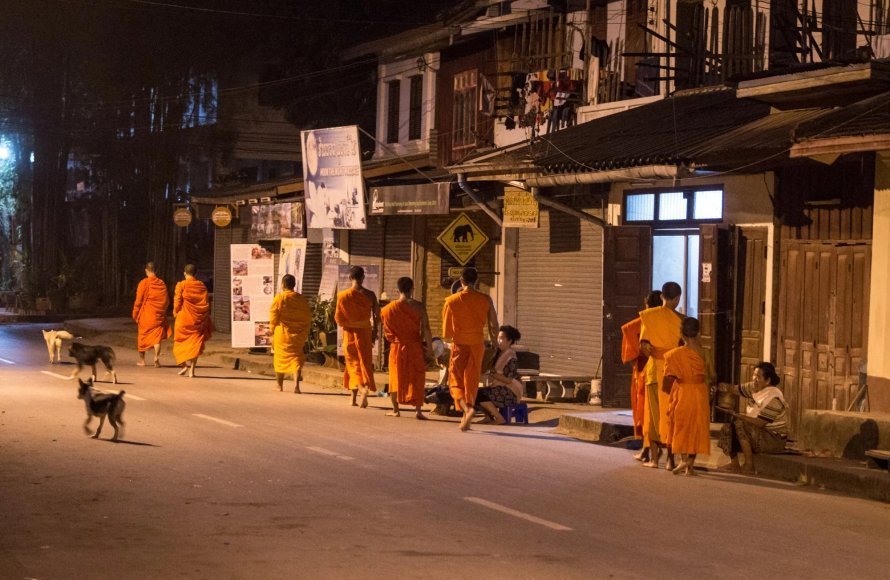
The ceremony begins before the sun crests the Mekong River. Shortly after 5:00 a.m., the steady, resonant boom of the temple drum echoes through the quiet streets. It is the call to prayer, the signal that another day of devotion has begun. Inside the temples, the monks arise, their days governed by a discipline of meditation, study, and simplicity.
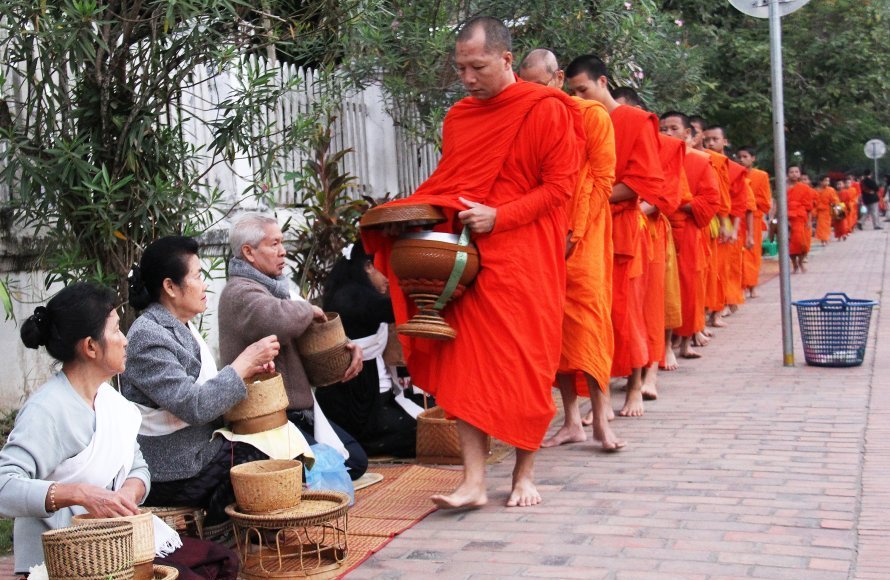
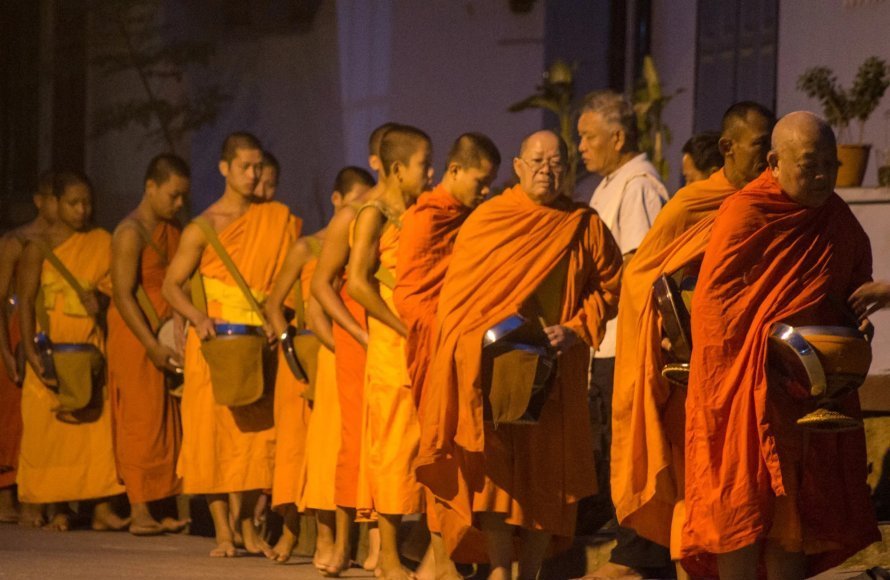
As the sky lightens from black to deep blue to a soft gold, the monks file out of their monasteries in single file. They walk barefoot, their heads bowed, their eyes cast downward in a posture of humility and mindfulness. Their saffron, ochre, and burnt-orange robes (colours that symbolise renunciation) provide the only vivid colour against the muted dawn landscape. They carry their only possessions: a simple aluminium alms bowl, or "Bat", slung over their shoulder.
This is not a parade for tourists. It is a sacred duty, a practice of mindfulness, and a vital link between the monastic community (the "Sangha") and the laypeople who support them.
The generosity of the giver
On the opposite side of this encounter are the faithful. Local Lao people, many of whom have risen even earlier than the monks, kneel on small stools or on woven mats placed directly on the pavement. They are dressed in their finest clothing, often wearing the traditional "Sinh" (a hand-woven silk skirt) as a mark of respect. Before them, they place their offerings.
The traditional offering is sticky rice ("Khao Niaow"), the staple food of Laos. Women carefully scoop portions of warm, freshly steamed rice from bamboo baskets and press it into small balls. Some may also offer packaged snacks, flowers, or money, though rice remains the most symbolic gift.
As the monks approach, there is no speaking. The interaction is one of profound silence. The layperson takes a ball of rice, raises it to their forehead in a gesture of reverence, and gently places it into the monk’s open bowl. The monk does not offer thanks in the conventional sense. His presence, his vows, and his daily study of the Buddha’s teachings "are" the thanks. By giving, the layperson earns spiritual merit ("Bun"), which is believed to improve their current life and ensure a better rebirth. The monk, in turn, depends entirely on this generosity for his sole daily meal.
A Cycle of Interdependence
This exchange embodies the beautiful interdependence at the core of Lao society. The monks provide the laity with an opportunity to practise generosity and accumulate merit. The laity provide the monks with their physical sustenance, allowing them to dedicate their lives to spiritual practice. Neither can exist without the other. It is a cycle of giving and receiving that has sustained Buddhism in Laos for centuries.
After receiving the alms, the monks chant a brief blessing. The Pali verses, ancient and melodic, float through the quiet morning air. They are words of peace and protection, offered freely to those who have given freely. Only then do the monks continue their silent procession back to the temple, where they will eat their only meal of the day before noon, spending the rest of it in prayer and meditation.
Witnessing with respect: a guide for visitors
For the visitor, "Tak Bat" is an unforgettable spectacle of faith and discipline. However, its growing popularity brings a responsibility to witness it respectfully. The ceremony is not a show, and the monks are not props.
To observe "Tak Bat" appropriately, there are essential guidelines to follow. First and foremost, maintain a respectful distance. Do not crowd the monks or step into their path. If you wish to photograph the ceremony—and it is one of the world’s most photogenic rituals—do so quietly and from a respectful distance. Never use a flash, as it disrupts the meditative atmosphere. The use of bright video lights or intrusive selfie sticks is deeply disrespectful.
If you wish to participate by offering rice, this should only be done through a reputable tour guide who can instruct you on the proper protocol. You must sit or kneel with your right shoulder towards the monks, remove your shoes, and ensure your clothing covers your shoulders and knees. The rice should be placed gently into the bowl without touching the monk. Never offer money or foreign food items directly; stick to the traditional sticky rice purchased from local vendors.
In recent years, the sacredness of "Tak Bat" has been challenged by mass tourism, with some visitors treating it as a spectacle. To experience it authentically, consider seeking a location away from the main tourist thoroughfares of Luang Prabang, or witness it in a smaller, less-visited town. Better yet, rise early, find a quiet spot, and simply observe. Watch the light change. Listen to the silence punctuated only by soft footsteps. In that moment, you are not just watching a ritual; you are witnessing the living heart of Laos, a tradition of grace and generosity that continues to beat with the rising sun.